

Low back pain and sciatica may be caused by a disc herniation.
What Is a Herniated Disc?
A herniated disc happens when the soft, cushioning material inside one of the discs between your vertebrae pushes out through a tear in the disc's tougher outer layer. That material can press on nearby nerves, which is what causes the pain, numbness, or weakness people usually associate with the condition.
It's different from a bulging disc, where the disc pushes outward but the outer layer stays intact, though the two can feel similar and are often confused with each other.
What Does It Feel Like?
You might not know it's a herniated disc yet. Common ways people describe it before they have a diagnosis:
A sharp or burning pain that runs down one leg or arm
Numbness or tingling in your hand, foot, or fingers
A dull ache in your lower back or neck that's stuck around for weeks
Pain that gets worse when you sit, cough, or sneeze
A feeling that it might be a pinched nerve
If a herniated disc is in your lower back, this can show up as sciatica, pain that radiates from your lower back down through your buttock and leg, since the affected nerve often runs that whole path.
What Causes a Herniated Disc?
Two main things, usually working together:
Aging. Discs naturally lose some of their water content and flexibility over time, making them more prone to tearing.
Injury or strain. A sudden movement, heavy lifting, or repetitive stress can be the specific event that causes a disc that's already weakened by age to herniate.
How Is It Diagnosed?
A herniated disc is typically identified through a physical exam and a review of your symptoms and history. Imaging, like an MRI, may be recommended to confirm the diagnosis and see exactly where and how significant the herniation is.

Diagram of disc conditions
Treatment Options
Most herniated discs are treated conservatively first, not with surgery. Depending on your specific case, options can include chiropractic care, physical therapy, targeted exercise, or non-surgical spinal decompression. In more severe or persistent cases, your doctor may discuss surgical options.
There's no single right answer for every patient, the right path depends on the severity, location, and how long you've had symptoms. This is exactly why an exam comes before any treatment recommendation here.
Our Take on Spinal Decompression for Herniated Discs
Here's an example scenario:
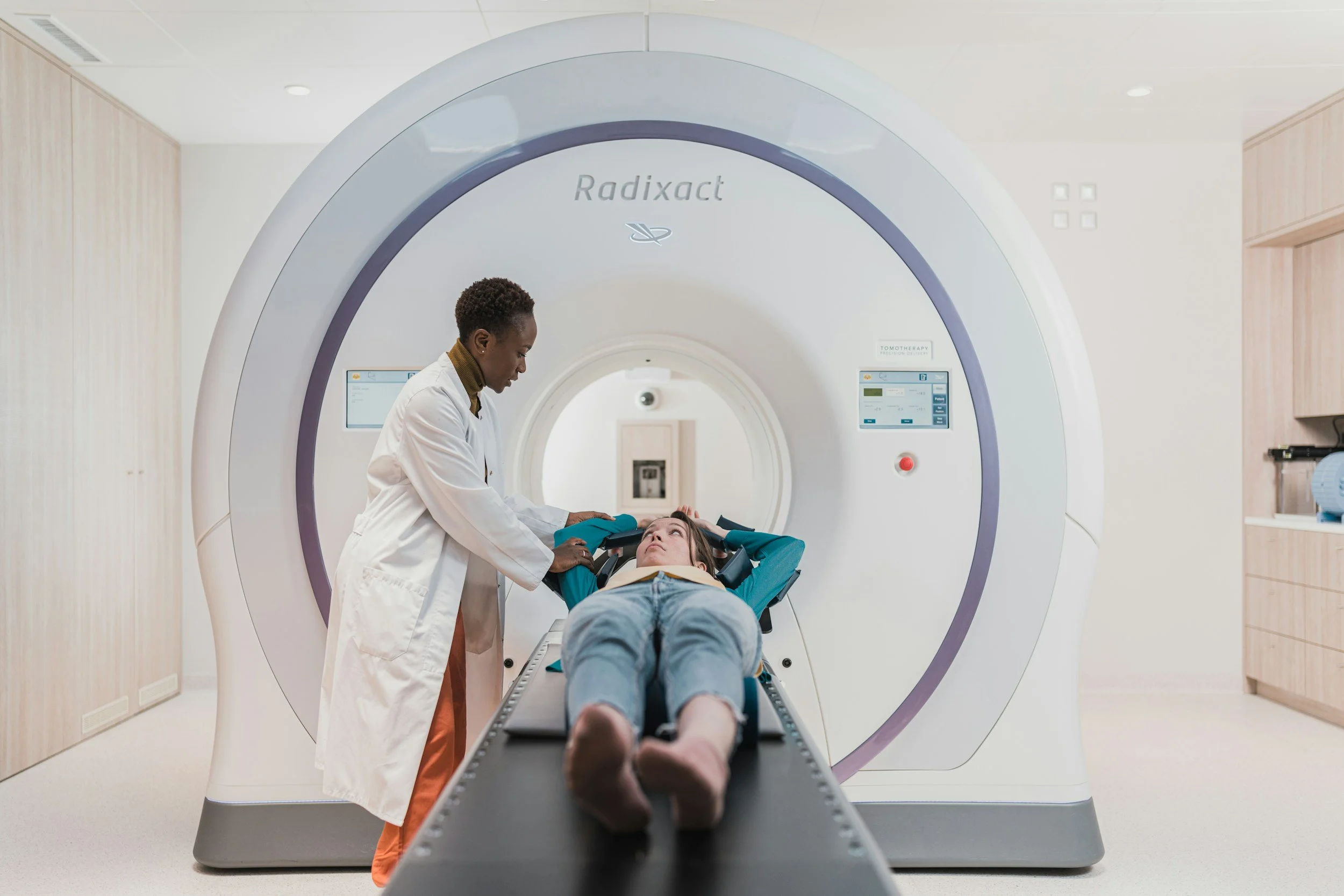
A patient might come in with back pain, we do an examination and may start with conservative chiropractic treatment if safe and recommended. If the doctor does not see symptoms resolving, they might recommend advanced imaging, like an MRI, to get a clearer picture of what's actually causing the pain.
Once imaging is done, our doctors review it alongside the radiologist's report. In many cases involving a herniated disc, a bulging disc, or a pinched nerve, spinal decompression and a course of treatment may be recommended. The imaging lets our doctors target the exact vertebrae involved.
We use the DRX9000specifically because of how it delivers treatment. It uses an advanced servo-motor, the same type of precision technology used in surgical robotics and aeronautics, that pulls at defined angles and weights, in a rhythmic motion, targeting the source of the pain. That servo-motor senses tension and feedback from the body and adjusts in response, unlike some traction machines that pull at a fixed force regardless of how the body reacts. This is why the DRX9000 is the machine we've used successfully with patients for 20 years.
When Should You See a Doctor?
If you're dealing with any of the symptoms above, it's worth getting checked out rather than waiting to see if it resolves on its own. Early evaluation gives you more information and more options.
Not sure what's causing your pain? Contact our office today →
FREQUENTLY ASKED QUESTIONS
Can a herniated disc heal on its own?
Many people improve with conservative therapy, treatment and time, though this varies by individual and by how severe the herniation is. An exam can help set realistic expectations for your specific case.
Is a herniated disc the same as sciatica?
Not exactly. A herniated disc is a cause of sciatica, sciatica is the term for the pain pattern that results when a nerve, often affected by a herniated disc, is compressed.
Do all herniated discs need surgery?
No. Many can be treated with conservative approaches first. Surgery is typically considered when conservative treatment hasn't helped after a reasonable period, or in more severe cases.
